
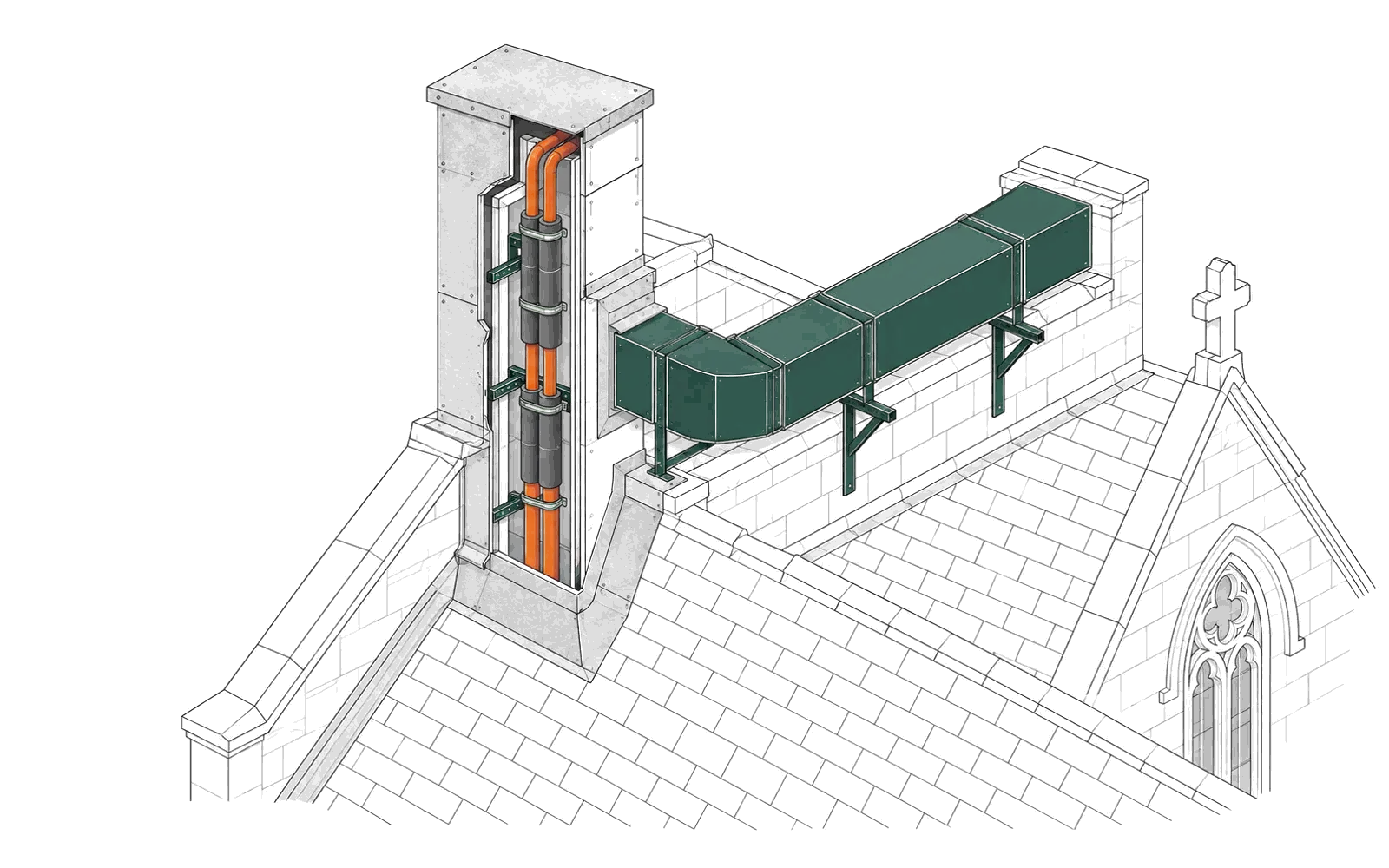
Places of worship
Church sites at Bukit Timah and Sengkang
Every fault traced to its cause, then a systematic check of both sites.
Keeping church halls, classrooms and offices ready for Sunday, and a phase-by-phase plan to replace around ten ageing systems one at a time, so the cost is spread instead of paid all at once or again and again in repairs.
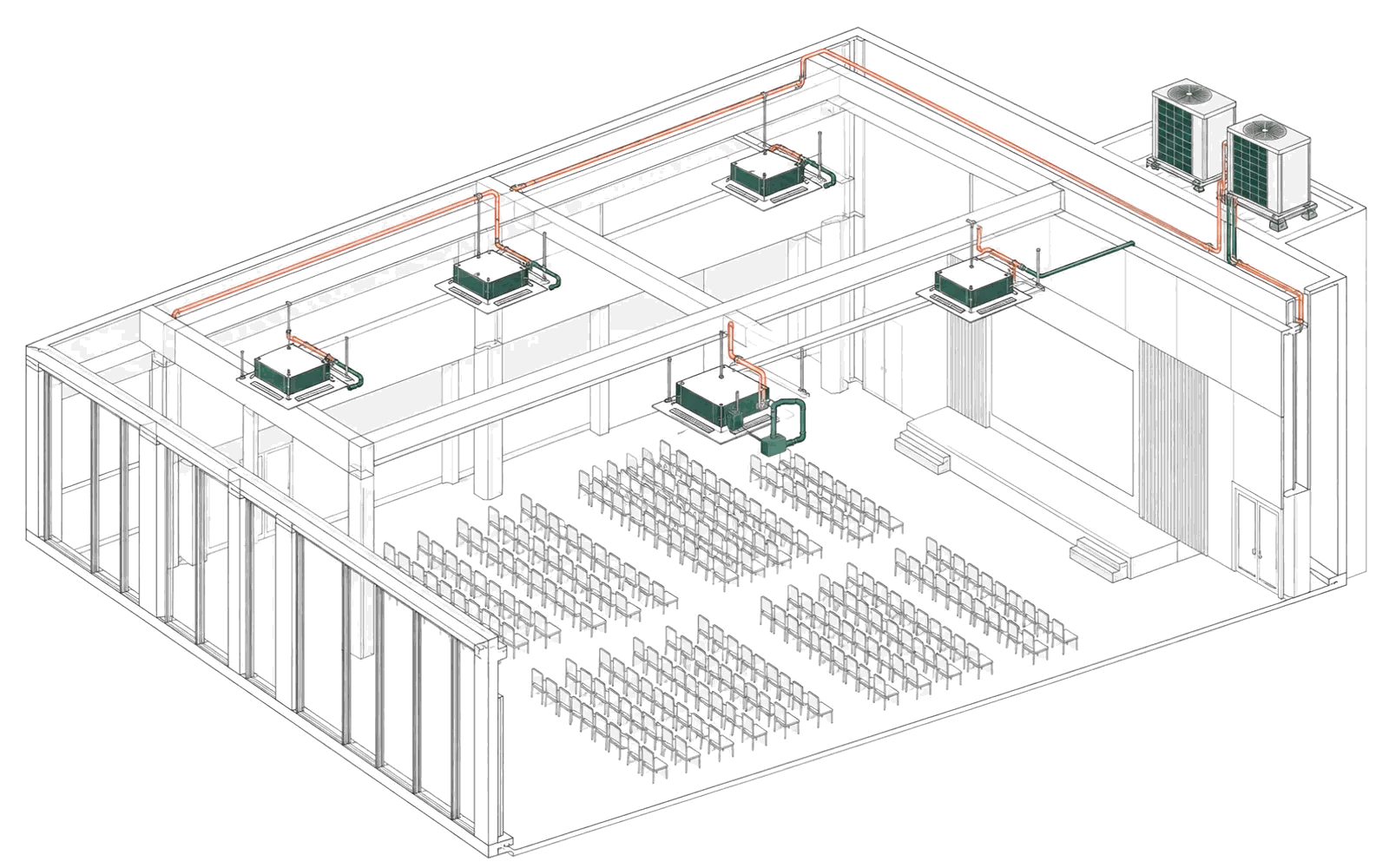
Congregations in a shared church building in Jurong West needed their halls, classrooms and offices kept cool, leaks dealt with, and an answer to systems that kept breaking down. Replacing every system at once was not affordable; repairing them one fault at a time was costing more each year.
Replace the systems phase by phase rather than all at once: the failing ones first, the rest in order of condition as they reach the end of their life, so the church spreads its outlay across budgets and stops paying for repairs on systems it is about to replace. Choose one brand now so every phase matches. We compared two side by side: Midea matches every capacity in the building, including the main hall, but needs new control wiring to each condensing unit; Daikin's wiring follows the existing route, but its nearest main hall unit is 5 to 6% smaller. Meanwhile, keep repairing only what is worth repairing.
The halls and rooms stay running through services and events, and the church has a costed, phase-by-phase route to replacing its ageing systems: spending on the worst first, one brand throughout, and no more money spent repairing systems that are due for replacement.
Places of worship
Every fault traced to its cause, then a systematic check of both sites.
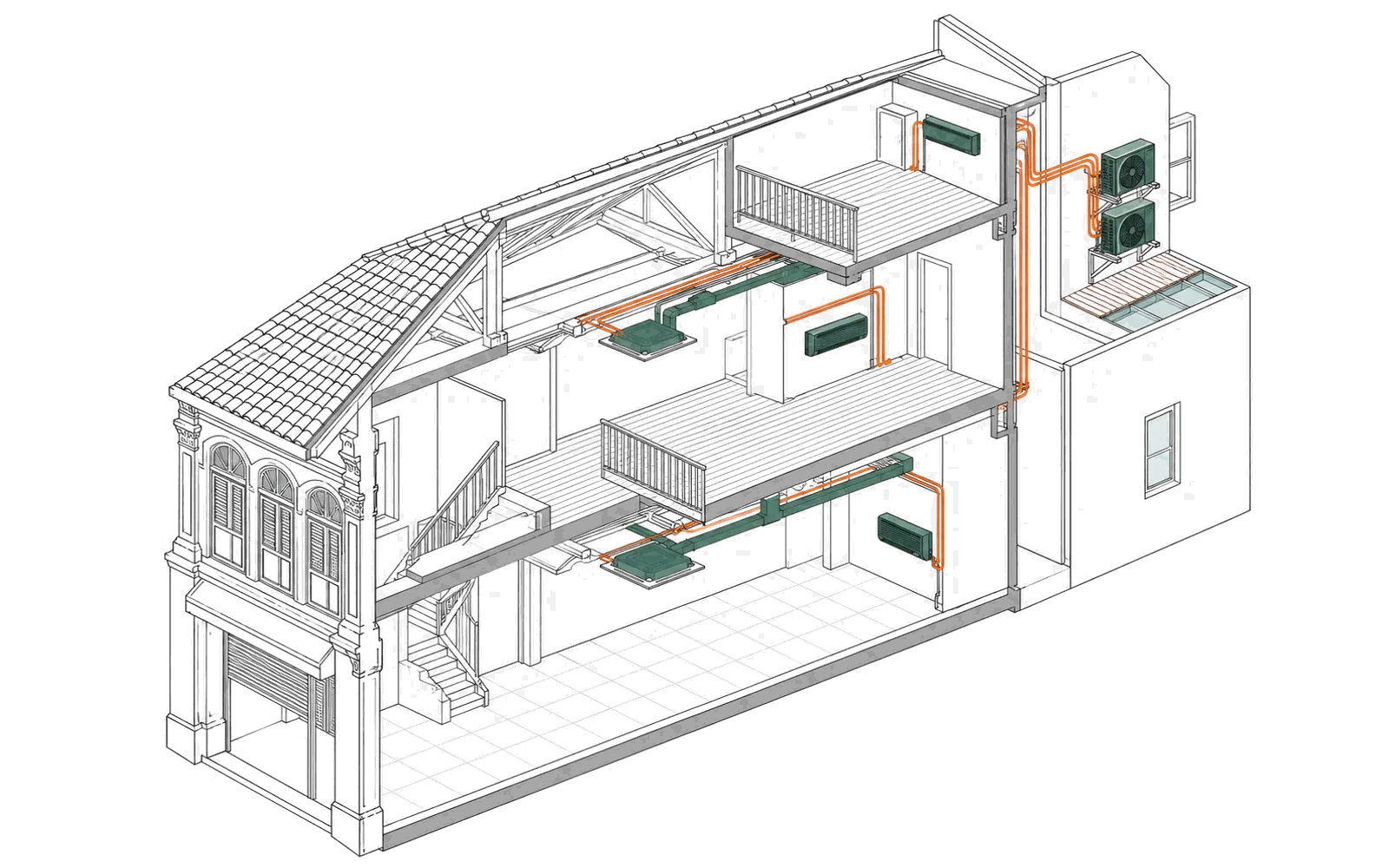
F&B
Every unit assessed, each space re-sized, condensers moved off an unreachable roof.
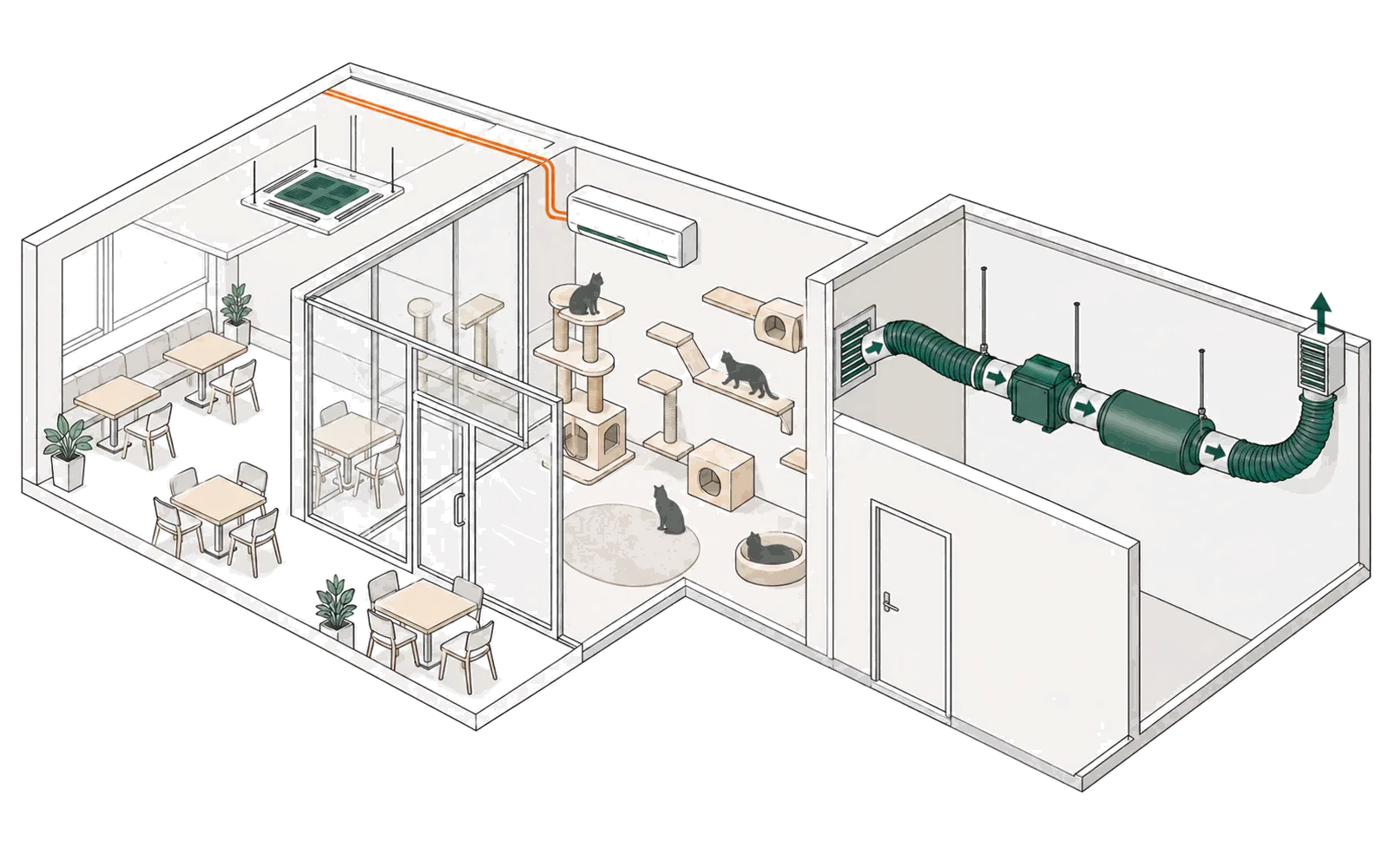
F&B
A room with more than 30 cats kept fresh by re-engineering its ventilation.