
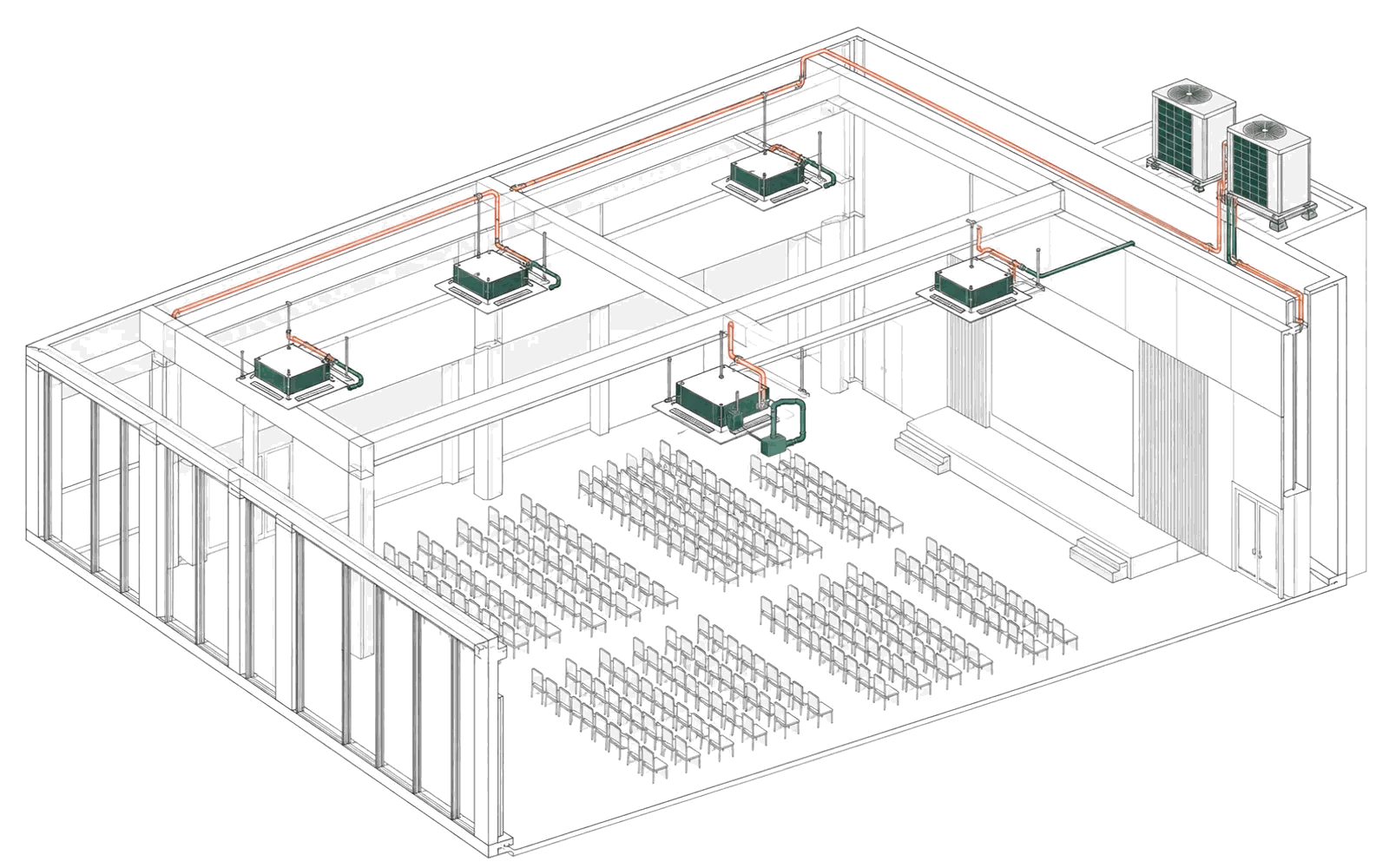
Places of worship
Churches in Jurong West
Ready for Sunday, and a phased plan to replace ten ageing systems one at a time.
Each problem on two church sites traced past the symptom to its cause, then a systematic check of both installations so the next faults are found before they surface.
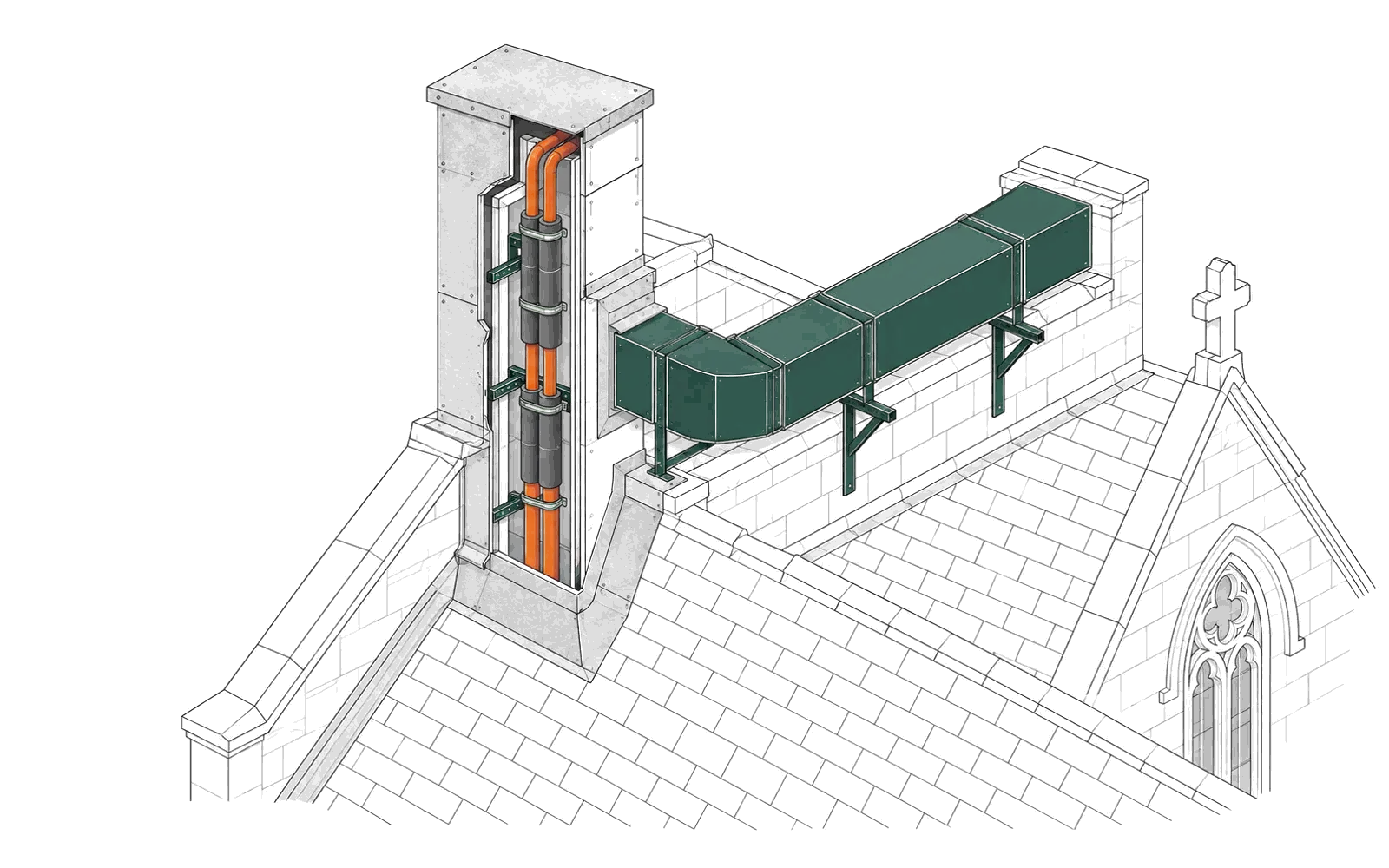
The main contractor renovating parts of two church sites called us in for untidy air-conditioning wiring. More issues followed: rooms losing fresh air, cassettes faulting, two offices that would not stay cool, and water dripping into a ceiling.
Fix each at its root, not at the symptom: new riser cabling in conduit from the condensing units up, bundled to the pipework, while the ceiling was open; all ten drains re-run together, since patching one length only moves the sag along; all three control parts replaced together; the riser made watertight first, before anyone looked at the roof slab. Because the drainage fault ran across a whole group of units, we proposed a systematic condition check of all 216 units on both sites, to give the church one asset register and a ranked list of what needs work now, what can be programmed and what can be watched.
Each fault was closed at its cause, in writing and with photographs. The condition check is under way across both sites, and has already flagged a faulty changeover panel on a server room's duty and standby units and an air handling unit fault, before either caused a failure.
Places of worship
Ready for Sunday, and a phased plan to replace ten ageing systems one at a time.
Offices
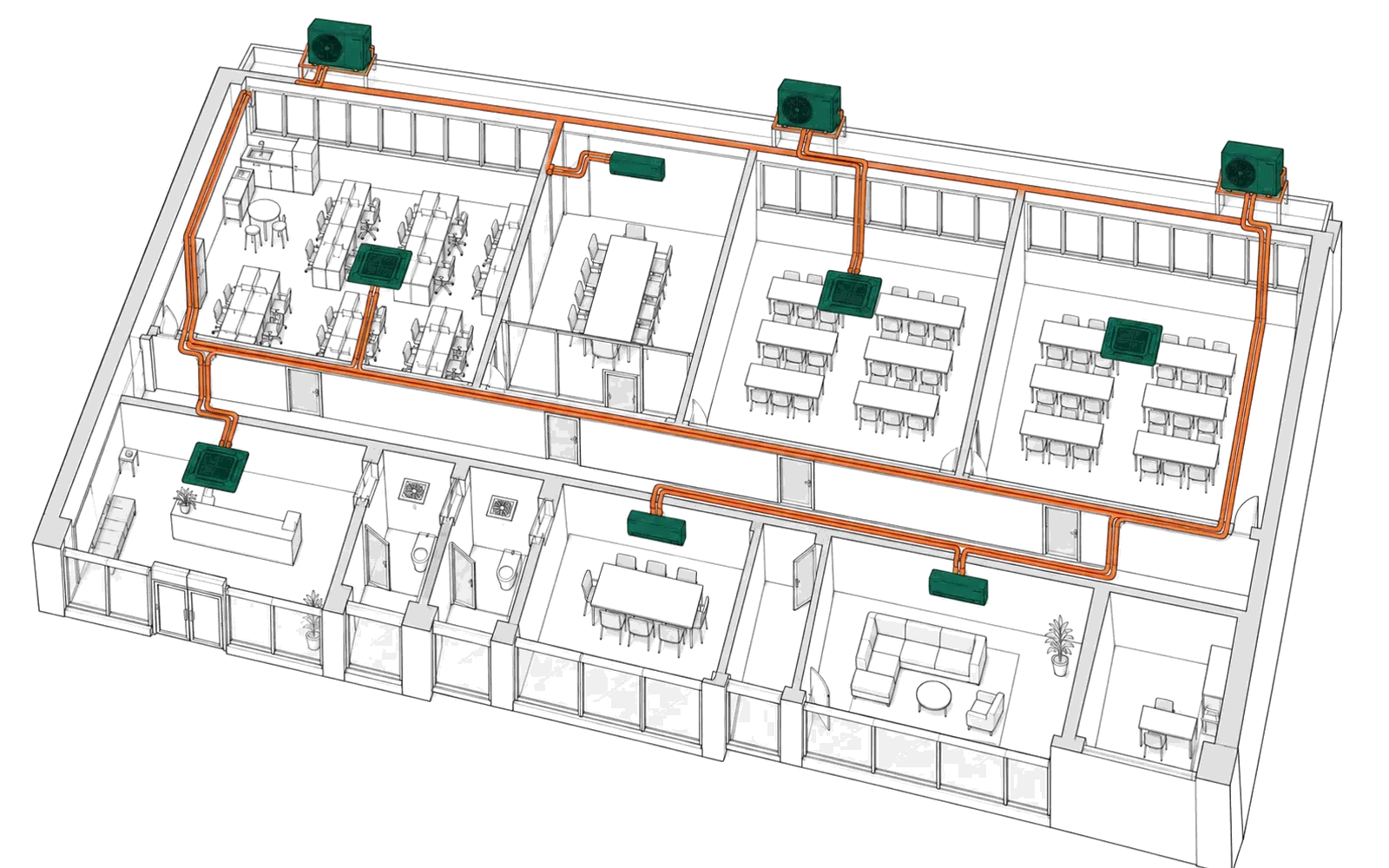
Unit-by-unit keep or replace, then a plan that cools every room at the lowest sensible cost.
Offices
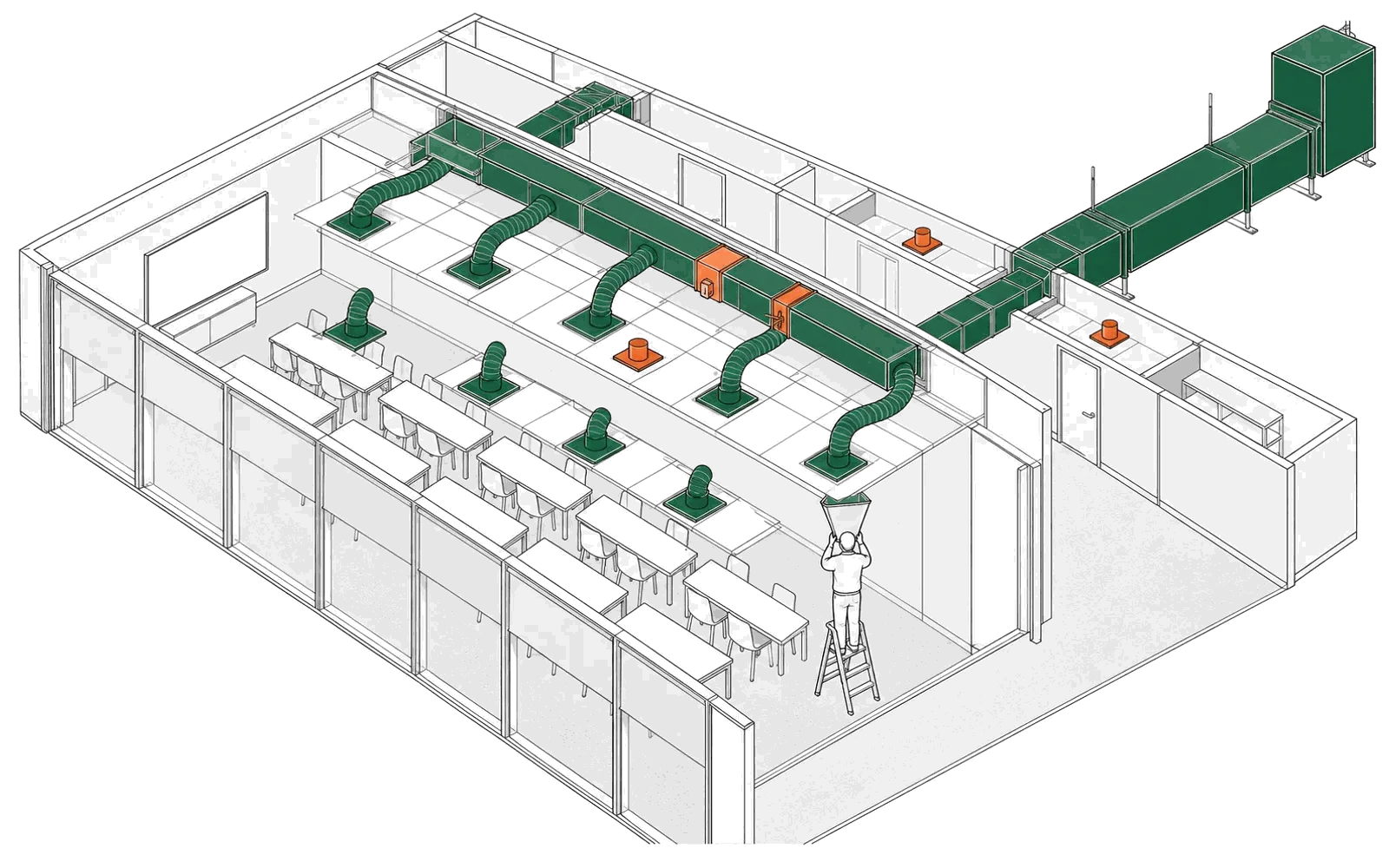
A stuffy room diagnosed, a phased plan, and 27% more air at the front.